

When Your Internal Thermostat Has a Mind of Its Own
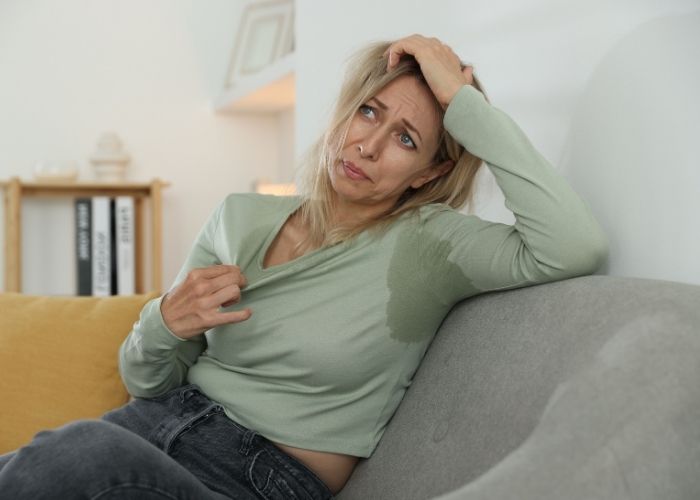
One minute you feel perfectly comfortable. The next, heat rushes through your face, neck, or chest, your heart may race, and you are searching for the nearest fan. At night, you may wake overheated, damp, or completely soaked - then struggle to fall asleep again.
Hot flashes and night sweats are among the most common symptoms of perimenopause and menopause. They can be mild and occasional, or disruptive enough to affect sleep, concentration, mood, work, exercise, intimacy, and quality of life.
At Benehealth, we do more than confirm that hot flashes are common. We look at when they started, how often they occur, what may be intensifying them, and how they fit with your sleep, menstrual changes, health history, medications, and other symptoms. From there, we help you understand evidence-informed hormonal and nonhormonal options that may be appropriate for you.

Quick Answer: Are hot flashes and night sweats caused by menopause?
Often, yes. Hot flashes and night sweats are known clinically as vasomotor symptoms. They are linked to changes in the brain's temperature-regulating system as estrogen levels fluctuate and decline during the menopause transition. The Menopause Society reports that they occur in up to 80% of women and last an average of 7 to 10 years, although the pattern and duration vary widely. Night sweats are hot flashes that happen during sleep.
Not every episode of flushing or sweating is caused by menopause. Thyroid disorders, infections, medications, low blood sugar, anxiety, sleep disorders, alcohol use, and other medical conditions can cause similar symptoms. New, severe, unusual, or unexplained symptoms deserve evaluation.
What does a hot flash feel like?
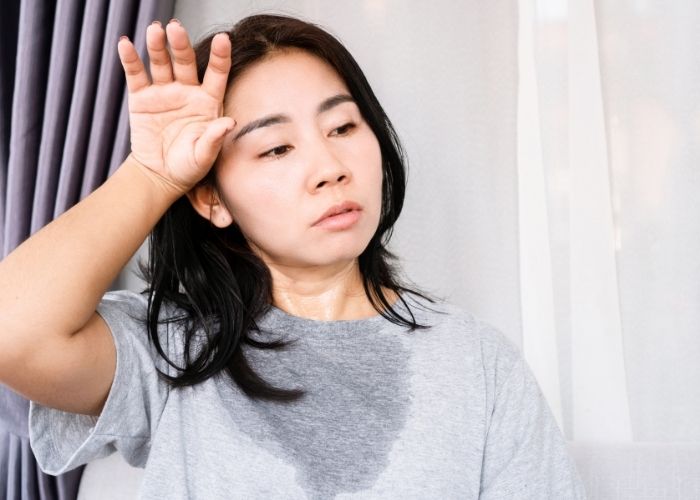
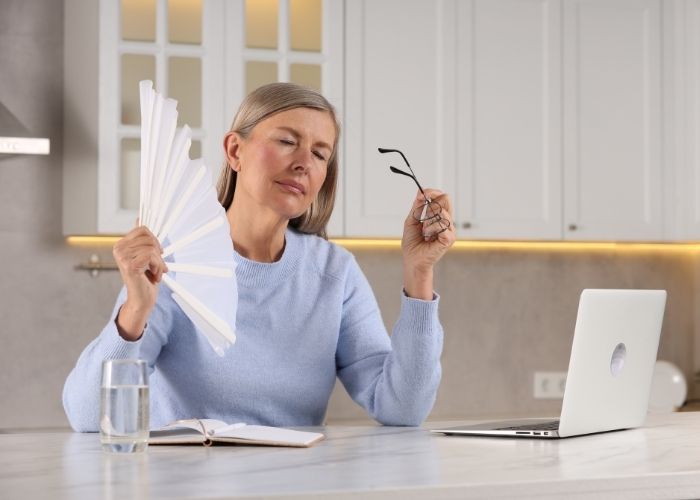
A hot flash commonly begins as a sudden wave of heat in the upper body, especially the face, neck, and chest. An episode may last about one to five minutes and can include:
- Flushing or visible redness
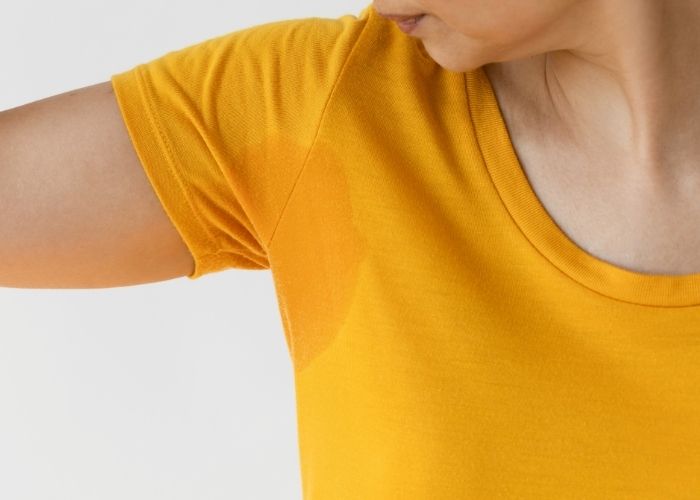
- Sweating that ranges from light moisture to drenching
- A rapid or pounding heartbeat
- A feeling of pressure, uneasiness, or anxiety
- Chills or shivering as the episode passes
- A need to remove layers, step outside, or stop what you are doing
Some women have only a few mild episodes. Others experience them many times a day or night. The impact matters just as much as the number.
What can trigger or intensify hot flashes?
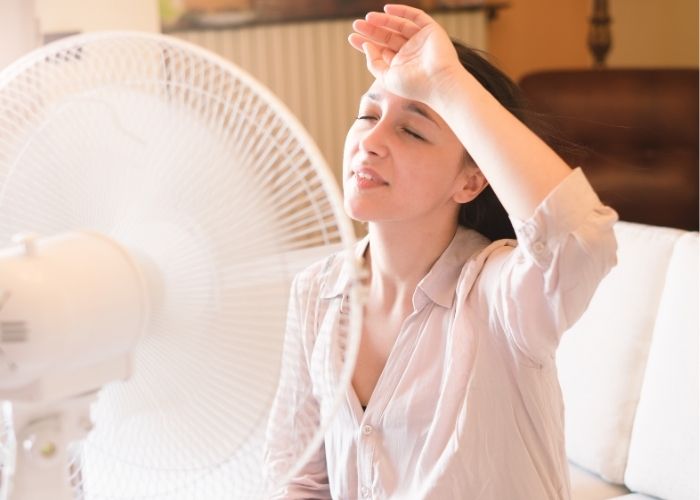
Triggers differ from woman to woman and are not the underlying cause of menopause-related vasomotor symptoms. Still, certain situations may make an episode more likely or more noticeable, including:
- Warm rooms, heavy bedding, or layered clothing
- Alcohol
- Hot beverages
- Spicy foods
- Caffeine for some women
- Smoking
- Emotional stress or feeling rushed
- Intense heat exposure
- Certain medications
A brief symptom log can help identify patterns, but you do not need to eliminate every possible pleasure from your life to prove you are trying. If symptoms are disrupting your well-being, it is reasonable to discuss treatment.
Could my night sweats be caused by something other than menopause?
Yes. Menopause is a common explanation in midlife, particularly when sweating occurs with cycle changes or other menopause symptoms. However, night sweats and flushing can also be related to:
- Thyroid dysfunction
- Fever, infection, or inflammatory illness
- Low blood sugar
- Anxiety or panic symptoms
- Obstructive sleep apnea
- Alcohol or substance use
- Prescription or over-the-counter medications
- Cancer treatment or hormone-suppressing therapy
- Less common endocrine, neurological, or blood-related conditions
The purpose of evaluation is not to make a common symptom frightening. It is to avoid assuming that every new symptom after 40 is automatically hormonal.
What are menopause night sweats?
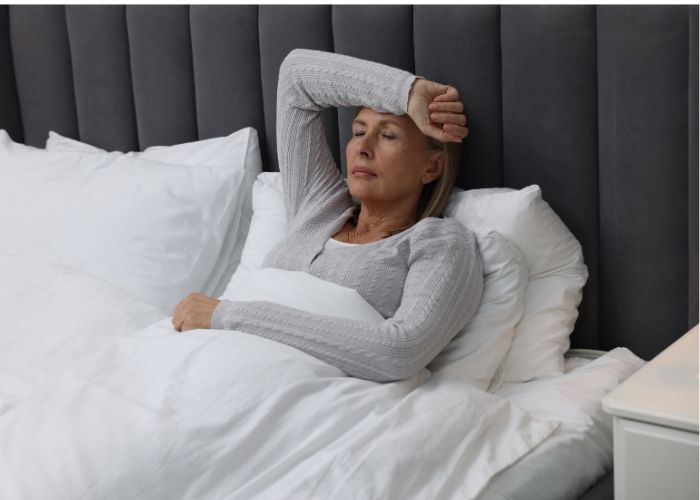
Night sweats are vasomotor symptoms that occur during sleep. You may wake feeling intensely hot, throw off the covers, notice damp clothing or bedding, and then feel chilled afterward. Even a brief episode can fully awaken the brain and make it difficult to return to sleep.
Repeated sleep disruption can contribute to fatigue, brain fog, headaches, irritability, anxiety, lower stress tolerance, and reduced daytime performance. Treating the nighttime symptom may therefore improve more than temperature comfort alone.
Why do hot flashes happen during perimenopause and menopause?
The brain normally maintains body temperature within a comfortable range. During the menopause transition, changing estrogen levels can affect the hypothalamus and neural pathways that regulate temperature. The body's temperature-neutral zone becomes narrower, so a very small internal change may trigger sweating and blood-vessel dilation as though the body needs to release excess heat.
Hot flashes may begin during perimenopause while periods are still occurring. They can continue after the final menstrual period and may change in frequency or intensity over time. Symptoms can also begin abruptly after surgical removal of the ovaries or certain medical treatments that lower estrogen.
When should hot flashes or night sweats be evaluated?
Schedule a healthcare visit when symptoms are frequent, worsening, disturbing sleep, affecting daily life, or simply concerning to you. Evaluation is especially important when sweating is new or unexplained, occurs outside the expected menopause transition, or is accompanied by fever, unexplained weight loss, swollen lymph nodes, persistent cough, significant weakness, or other unusual symptoms.
Seek urgent care for chest pain, fainting, severe shortness of breath, a sustained irregular or very rapid heartbeat, or other symptoms that may indicate an emergency rather than a typical hot flash.
How Benehealth evaluates hot flashes and night sweats
There is no single laboratory test required to prove that a woman is having menopause-related hot flashes. Evaluation begins with the pattern of your symptoms and your overall health story.
Depending on your age, menstrual history, symptoms, and clinical needs, we may review:
- When symptoms began, how often they occur, and how disruptive they are
- Menstrual cycle changes and menopause stage
- Sleep quality, insomnia, snoring, and daytime fatigue
- Mood, anxiety, stress, and cognitive symptoms
- Current medications, supplements, alcohol, caffeine, and nicotine
- Personal and family medical history
- Breast, uterine, cardiovascular, clotting, liver, and bone-health considerations
- Thyroid, blood sugar, or other targeted concerns
- Laboratory testing when it is likely to clarify the clinical picture
- Whether referral or additional evaluation is appropriate
Hormone levels fluctuate substantially during perimenopause, so a single hormone test does not always explain symptoms or determine treatment. Testing should answer a clinical question rather than become a costly fishing expedition.
What helps hot flashes and night sweats?
The right plan depends on symptom severity, menopause stage, health history, treatment preferences, and whether other contributors are present.
You do not have to simply sweat it out
Hot flashes and night sweats are common, but suffering through them is not a requirement of midlife. When symptoms repeatedly wake you, interrupt your work, affect your confidence, or make you feel unlike yourself, it is time for a more thoughtful conversation.
At Benehealth, we connect the dots between your menopause stage, sleep, stress, metabolic health, medical history, and personal priorities. Our goal is not to push a single treatment. It is to help you understand your options and create a practical plan that fits your health and your life.